AI engineering · 2025
Data-to-Policy
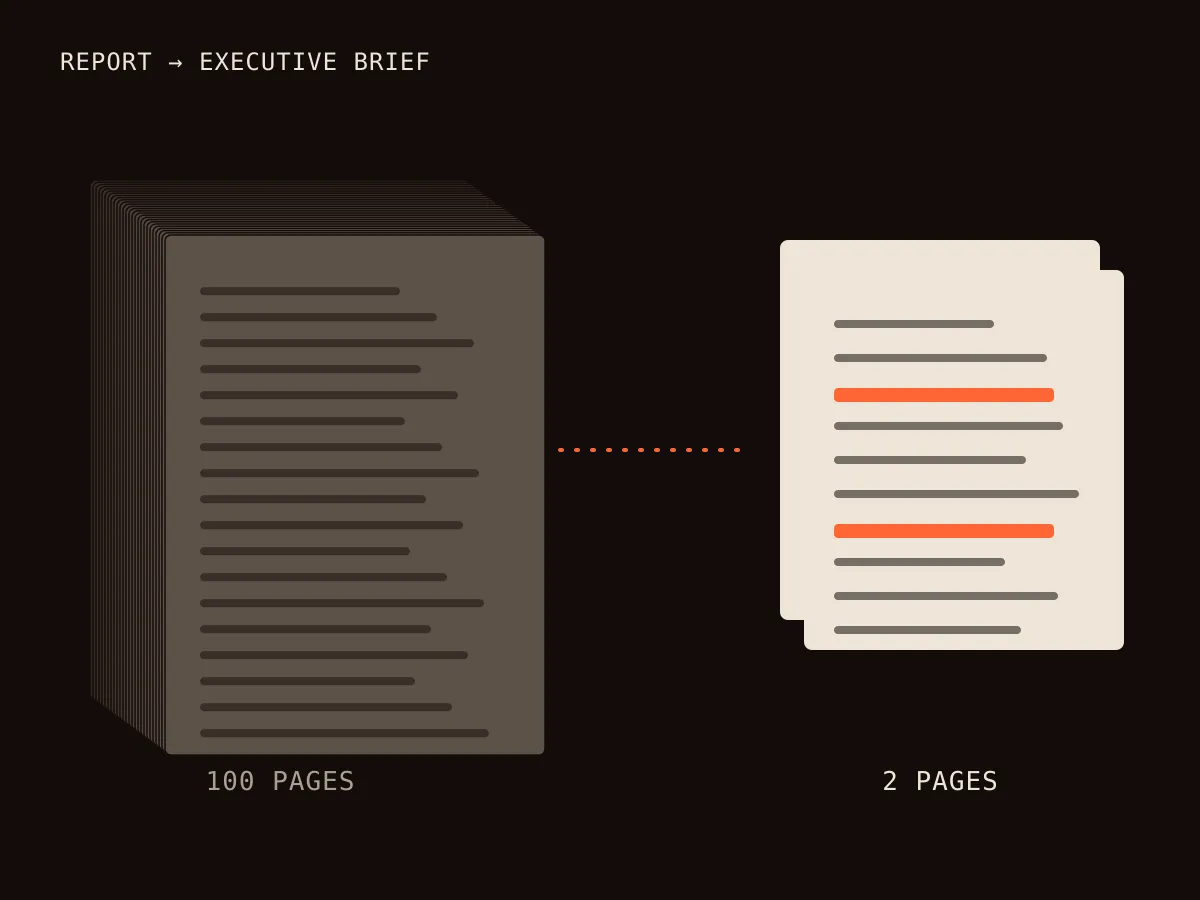
A LangGraph team of five agents that turns a dense 100-page report into a two-page executive brief, and keeps rewriting until a reviewer agent approves it.
- pages, report to brief
- 100→2
- specialised agents
- 5
- verified facts per brief, schema-checked
- 5
Intended use
Policy teams receive reports far longer than anyone has time to read.
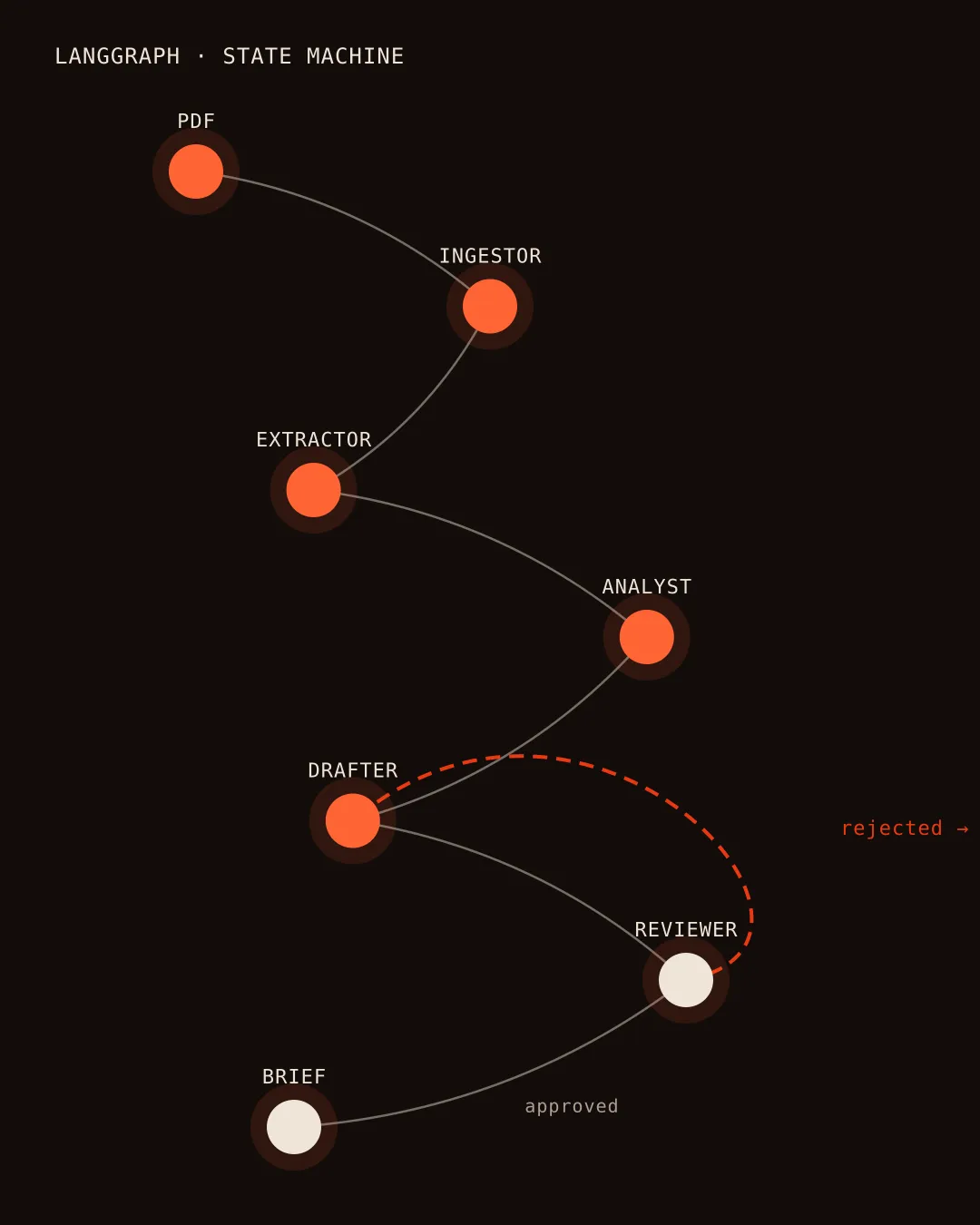
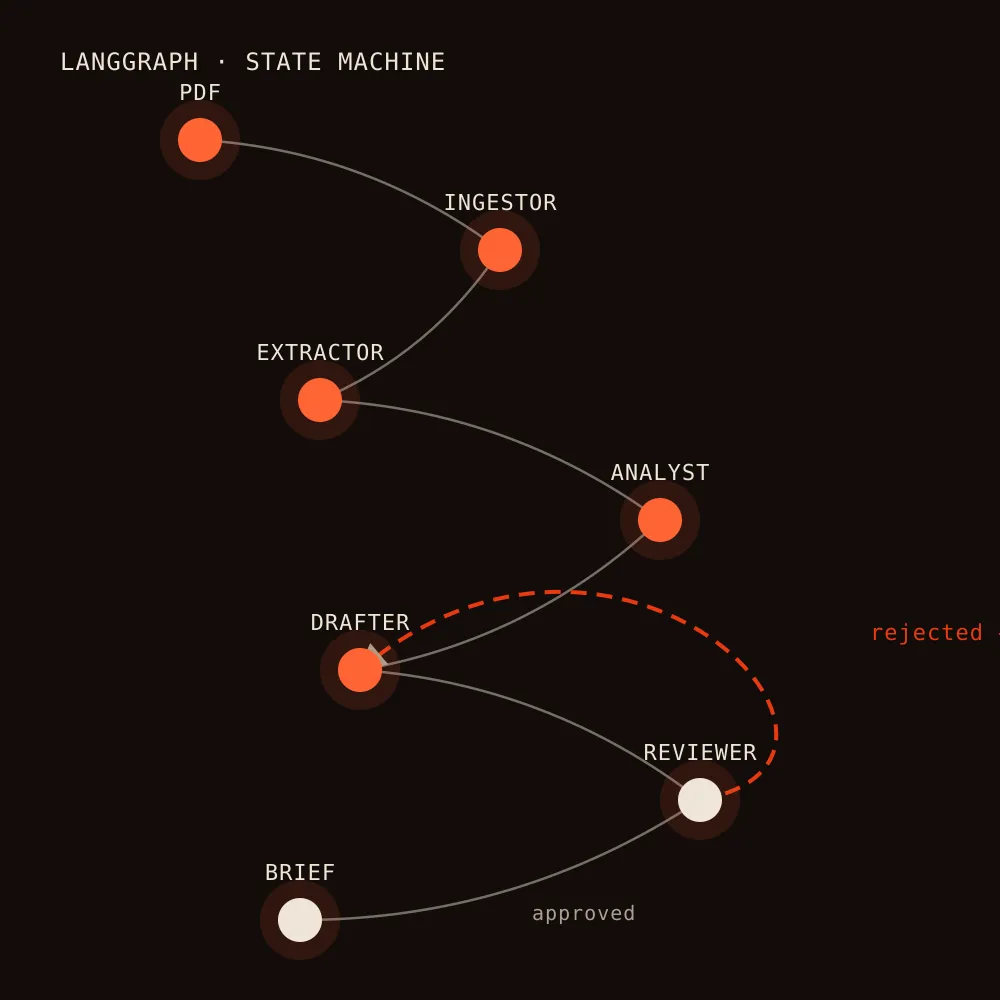
Data-to-Policy turns a long socio-economic report into a two-page brief a decision-maker can act on. The hard part is trust: single-shot prompts drop statistics or invent them. So the work is split across agents with narrow jobs, the facts are schema-checked, and a reviewer can send drafts back until they hold up.
Architecture
Decisions
- A graph, not a prompt. LangGraph models the work as a state machine, so every brief passes the same steps in the same order.
- Facts are typed. The extractor must return exactly five statistics that validate against a Pydantic schema, or the run fails loudly.
- A reviewer with veto. The director agent rejects drafts with a written critique, and the drafter rewrites only the parts it criticised.
- Fast inference makes loops affordable. Running Llama-3.3-70B on Groq keeps a three-round review loop within seconds.
Results & evaluation
- pages, report to brief
- 100→2
- specialised agents
- 5
- verified facts per brief, schema-checked
- 5
Limitations & next steps
- Quality is judged by the reviewer agent and by hand; there is no labelled benchmark yet.
- Tables and charts in source PDFs are read as text and can lose structure.
- Next: citation links from every claim back to the source page.